Showing posts with label bird. Show all posts

Wednesday, December 18, 2024

Thick Billed Green Pigeon

The thick-billed green pigeon (Treron curvirostra) is a visually striking bird species native to the lush tropical and subtropical forests of Southeast Asia, including Malaysia, Thailand, Indonesia, and parts of India. Renowned for its vivid greenish-yellow plumage, this pigeon blends seamlessly into its arboreal surroundings, using its coloration as camouflage against predators. The thick, curved bill, from which it derives its name, is another distinctive feature that aids in consuming a diverse range of fruits.

As primarily frugivorous birds, thick-billed green pigeons play a pivotal ecological role by aiding in seed dispersal. Their diet predominantly consists of figs, supplemented by other forest fruits. By consuming fruits and excreting the seeds in different locations, these pigeons contribute to forest regeneration and biodiversity. This makes them indispensable for maintaining the health of Southeast Asia’s forests. Typically observed in small flocks, these birds forage in the upper canopy, a behavior that minimizes competition with ground-dwelling frugivores.

The breeding habits of the thick-billed green pigeon are intricately linked to their environment. Breeding seasons vary regionally but generally align with periods of food abundance, often during the warmer months. Nests are flimsy constructions made of twigs, precariously perched high in trees to avoid predators. Females usually lay one or two eggs, with both parents sharing incubation duties. After hatching, chicks are nourished with “pigeon milk,” a nutrient-rich secretion from the parents’ crop, highlighting their dedication to offspring care.

Despite a currently stable population, thick-billed green pigeons face escalating threats from habitat destruction caused by deforestation, urbanization, and agricultural expansion. The relentless clearing of forests for palm oil plantations and timber severely diminishes their natural habitat, reducing food sources and nesting sites. In addition, illegal wildlife trade poses a risk, albeit less pronounced for this species compared to others.

Conservation measures, including habitat preservation and sustainable forestry practices, are critical to ensuring the species’ survival. Initiatives such as protected areas, reforestation projects, and community-based conservation efforts can mitigate threats. Moreover, raising awareness about the ecological importance of frugivorous birds like the thick-billed green pigeon is vital for fostering long-term coexistence between humans and wildlife. These pigeons symbolize the intricate balance of Southeast Asia’s ecosystems and underscore the urgency of biodiversity conservation.
Thick Billed Green Pigeon

Monday, November 18, 2024

Grey-Cheeked Thrush: Migration, Melody, and Conservation

The Grey-cheeked Thrush (Catharus minimus), affectionately nicknamed the "Grey-cheese bird" due to a playful mispronunciation, is a small migratory songbird of the thrush family. Its defining feature, greyish cheeks, contrasts with its olive-brown upperparts and white underparts, lending it a subtly elegant appearance. This species breeds in the boreal forests of North America, primarily in Canada and Alaska, and winters in the tropical forests of South America.

Its migratory journey is among the most impressive in the avian world. Spanning thousands of miles, this semi-annual migration involves nonstop flights over vast expanses, including the Gulf of Mexico. Recent studies utilizing geolocators reveal that some individuals travel nearly 10,000 miles round-trip annually, showcasing extraordinary endurance and navigational skills. During migration, the thrush depends on an energy-rich diet of insects and berries. These foods not only sustain their long flights but also highlight the critical role of stopover habitats in their survival.

The thrush’s ethereal song, a cascade of flute-like notes, adds to its allure. Males sing primarily during the breeding season, using their melodious calls to attract mates and defend territories. While its physical appearance is understated, its vocalizations captivate birdwatchers and researchers alike. The song’s distinct quality has made the Grey-cheeked Thrush a focus of studies on bird acoustics and communication.

Despite its remarkable traits, the species faces conservation challenges. Habitat loss in both breeding and wintering grounds due to deforestation and climate change threatens its survival. Additionally, light pollution during migration disrupts their navigation, increasing the risk of collisions with man-made structures. Conservation efforts emphasizing habitat protection and reducing light pollution are crucial for sustaining their populations.

The Grey-cheeked Thrush is more than a bird; it is a symbol of resilience and natural beauty. Its migratory feats and melodic contributions to the boreal soundscape remind us of the intricate connections in our ecosystems and the urgent need to protect them.
Grey-Cheeked Thrush: Migration, Melody, and Conservation

Monday, August 26, 2024

Dracula Parrot: New Guinea's Unique and Endangered Avian Marvel

The Psittrichas fulgidus, commonly known as the Dracula parrot, is a striking and unique bird native to the rainforests of New Guinea. This parrot is renowned for its distinctive appearance, characterized by a black body, bright red chest, and a vulture-like head devoid of feathers. The Dracula parrot’s unusual look has earned it a place among the most fascinating avian species.

Belonging to the family Psittrichasiidae, the Dracula parrot is the only member of its genus, making it an evolutionary marvel. Its bald head is an adaptation to its diet, which primarily consists of figs and other fruits. Unlike many other parrots, the Dracula parrot's featherless head helps it avoid the messy consequences of eating juicy fruits, preventing sticky residues from matting its plumage. This adaptation is particularly advantageous in the humid environment of the rainforest, where cleanliness is crucial to avoid bacterial and fungal infections. Additionally, its strong, curved beak is perfectly suited for cracking open tough fruit skins, allowing it to access the nutrient-rich pulp within. This specialized feeding habit showcases the bird’s evolutionary adaptations to its ecological niche.

In addition to its unique physical traits, the Dracula parrot plays a crucial role in its ecosystem. By feeding on fruits and dispersing seeds, it contributes significantly to the health and regeneration of the rainforest. Seed dispersal is a vital ecological process that helps maintain the diversity of plant species, ensuring the continued vitality of the forest. The Dracula parrot’s role in this process highlights its importance beyond its striking appearance.

Despite its ecological significance, the Dracula parrot faces serious threats from habitat loss due to deforestation and hunting, often driven by illegal wildlife trade. The bird's striking appearance makes it a target for poachers seeking to capture it for the pet trade. Consequently, concerns about its conservation status have grown, prompting international and local efforts to protect it. Conservation initiatives include habitat preservation, enforcing anti-poaching laws, and raising awareness about the ecological role and plight of the Dracula parrot. Ensuring the survival of this remarkable species is vital for maintaining the biodiversity of New Guinea’s rainforests, which are among the most ecologically rich regions on the planet. Without concerted efforts, the Dracula parrot and the intricate web of life it supports could be at risk.
Dracula Parrot: New Guinea's Unique and Endangered Avian Marvel

Saturday, May 6, 2023

Allen's hummingbird

Allen's hummingbird, Selasphorus sasin. Named for Charles A. Allen (1841-1930), an amateur ornithologist who is credited with being the first to recognize this bird as a distinct species.

Allen's Hummingbirds are small, compact, and stocky hummingbirds. The bill is straight and about as long as the head. The tail extends past the wings when perched and the outermost tail feather is narrower than the rest.
Male: Throat iridescent fame-orange.
Female: White throat with lines of dark spots.

Breeding only in a slender strip along the coast of California and southern Oregon, Allen’s Hummingbird has a remarkably limited distribution.

Allen's Hummingbirds look similar to the Rufous hummingbirds. Key differences between them are:
■ Female and immature Allen's hummingbirds have narrow outer tail feathers.
■ They have a reddish-orange color throat and orange bellies, tails, and eye markings.

A male Allen; s hummingbird can fly 45 miles per hour during the dive display. Hummingbird can fly forward, backward, and even upside down briefly, which they accomplish by spreading their tail and doing a backward somersault.
Allen's hummingbird

Tuesday, March 28, 2023

Great blue herons

The great blue heron is long slim built and is an expert fisher. Both male and female share similar features and they range in length from 102-127 cm and weigh approximately 2.4 kg. Adults have bluish gray wings and white heads decorated by a black streak above the eye. They have long necks streaked with white, brown, and black, and a long yellow beak that tapers to a point.

Great blue herons nest in colonies, some of them with hundreds of nests. They breed and nest in fresh and salt water habitats that include marshes, beaver impoundments, wet meadows, estuaries, tidal flats, sandbars, shallow bays and the margins of lakes, ponds, streamsand rivers.

Great Blue Heron colonies generally become inactive within five years if they remain smaller than six nests, but they tend to persist, on average, for 12 or more years if they grow to more than 20 nests.

Great blue herons tend to build their nests at least 60 feet above the ground. They are such graceful and powerful fliers that they can gather large sticks and carry them up to 100 feet above the ground, forming a cradle for their eggs in treetops or at other raised sites.

These birds are commonly found in tropical and subtropical regions and they often

migrate during spring and summer when they are breeding. Great blue herons feed on just about anything, from fish to amphibians to mammals to birds, and they hunt by wading cartoonishly slowly into water and then nailing their prey with lightning-quick strikes.

Great blues deploy an elaborate repertoire of courtship displays, from stretch and snap displays to bill duels and twig shakes, and when they find a mate they tend to limit themselves to two or three of about 15 types of displays.

Great blue herons are sensitive to habitat loss and disturbance. For example, loss of nesting habitat, deterioration of water quality, and loss of wetlands can threaten herons.
Great blue herons

Thursday, July 7, 2022

Crow (genus Corvus)

Crows are generally smaller and not as thick-billed as ravens, which belong to the same genus. A large majority of the 40 or so Corvus species are known as crows, and the name has been applied to other, unrelated birds.

There are about 40 species of crow. There are many different sizes of crows. The American crow measures around 17.5 inches (45 centimeters). The fish crow measures around 19 inches (48 cm). The common raven is much larger and measures around 27 inches (69 cm).

Crows can be found all over the world in a variety of habitats. The American crow lives all over North America and prefers open areas — agricultural land and grasslands — with trees nearby. While some birds are fairly quiet, these black birds are known for their loud sounds. While their most notable sound is a caw, they can coo or even rattle. Its sound makes identification even easier.

Crows are omnivores (eats both plant and animal foods) and will sometimes come to eat one food, such as insects, but then stay around or return to eat another, such as garden produce. Crows eat small animals such as mammals, amphibians, reptiles, eggs and carrion.

Crows are extremely intelligent birds. They are known for their problem-solving skills and amazing communication skills. They use tools to solve complex problems, and they remember faces for years and mimic sounds they hear.
Crow (genus Corvus)

Tuesday, April 12, 2022

Owls – birds of prey

Owls are primarily nocturnal birds of prey that fit in one of two families: Tytonidae or barn owls with their distinct heart-shaped facial disks and Strigidae—all other owl.

Owl is a large, round head and huge, forward-facing eyes are features that make an owl instantly recognizable. All owls have an upright posture and forward-facing eyes that give them binocular vision, just like humans.

They also have a sharp, downward-facing beak (or bill), and soft, cryptically colored plumage. Males and Females are generally similar in appearance, although the female is often up to 25% larger.

The eyes of an owl are not true “eyeballs.” Their tube-shaped eyes are completely immobile, providing binocular vision which fully focuses on their prey and boosts depth perception.

Owls are raptors, which means they hunt other living things for their food, using their special adaptations and unique abilities that set them apart from any other creature.

Owls hunt throughout the night in deserted places such as cemeteries, run-down farms, and other open areas. Owls apparently feed only on animals. Rodents are the most common prey; the smaller species, however, eat insects.

Prey is usually eaten whole, but the whole prey is not digested. An owl's digestive tract compresses the undigested portions of the prey, such as fur and bone, into a compact pellet that the owl coughs up and expels through its mouth.

Most owls do not migrate, but they can be nomadic in searching for the best food sources.
Owls – birds of prey

Thursday, April 15, 2021

Woodpecker

The hotspots of woodpecker species richness are in south-east Asia, in South and Central America, and in equatorial Africa.

Trees, snags and logs are primary substrates providing nesting sites, shelter, and food for the majority of woodpeckers.

Woodpeckers have evolved the anatomy and skills to excavate deep nesting chambers and foraging holes in trees. Studies of rare or endangered woodpeckers often indicate that these species need a substantial number of mature, “overmature,” or dead and dying trees upon which to forage or excavate cavities.

Cavities are the most obvious signs that woodpeckers leave to reveal their presence. Some are used as nesting sites, others as roosts while a few can be used for both.

Certain woodpeckers within the nest-web can be regarded as keystone species, such as the black woodpecker (Dryocopus martius) that provides the largest cavities in Europe.
Woodpecker

Tuesday, January 26, 2021

Falcon: Bird of prey

Falcons are swift raptors with long, pointed wings and long tails. They are keystone species that serve as indicators of ecological health in their habitat and subsequently for the prey species that they rely upon.

They capture their primarily avian prey in open country by virtue of superior speed, either in powered flight or in a characteristic dive called a stoop.
A stooping falcon folds its wings and dives from a high perch or while flying overhead, and may exceed 320 kilometers per hour (200 miles per hour).

Falcons belong to the order Falconiformes and genus Falco consists of 37 species and 17 subspecies. They are placed at the top of the food chain and are also good indicators of habitat quality since these long-lived birds can only survive in habitat offering sufficient food and nesting sites.

Falcons typically seize prey in their strong, taloned feet, but are known to disable or even kill prey with sharp blows from their feet as they stoop on quarry. Prolonged ground fights with struggling prey animals could damage their relatively stiff flight feathers and reduce the future ability to catch prey, so falcons typically sever prey animals’ spinal cords by separating neck vertebrae to quickly end contests.

Falco peregrinus 
The peregrine falcon is one of nature’s swiftest and most beautiful birds of prey. Its name comes from the Latin word peregrinus, meaning “foreigner” or “traveler.”

Traditionally, peregrine falcon nest sites were restricted to cliffs and rock outcrops. As people began to inhabit areas occupied by peregrines, the birds took to nesting on buildings and bridges. Today, peregrines continue to nest on these man-made structures.

Peregrine falcons feed primarily on other birds, such as songbirds, shorebirds, ducks, and—in urban areas—starlings and pigeons. Flying high above their intended prey, peregrines will “stoop” or dive and strike in mid-air, killing the prey with a sharp blow.

The peregrine falcon’s primary diet consists of birds mostly captured in flight and its ability to catch birds in mid-air makes it a unique hunter in nature.

With long, pointed wings, a long, tapered tail and flat head, peregrines can attain rapid speeds in powered flight or stoops. Attaining dive speeds of up to 200 miles per hour, the peregrine falcon is the planet's fastest bird.
Falcon: Bird of prey


Tuesday, January 5, 2021

Myna: Bird of starling family

Mynas are birds of the starling family (Sturnidae). In the wild there are in the order of thirty species of myna, some, but not all of which, are good vocal mimics. They are closely related to that other group of avian impressionists, the Mimids (mockingbirds and thrashers) of North America.

Myna are alert and clever birds that learn fast and communicate well with each other. They are used to living near or in human settlements and are not afraid of people.

The word 'mynah' or 'myna' derives from the Hindi word mainā, a term of endearment used for pets, children and favoured females. Mainā itself derives from the Sanskrit madana, meaning joyful or delightful. It is also said to mean 'messenger of God' in Sanskriti.

The common myna or Indian myna is a medium-sized bird native to the Middle East, India and Asia. Indian mynas are brown with a glossy black head, neck and upper breast; bright yellow bills, eye skin, legs and feet; and an upright posture.


Common myna is native to the Caspian Sea region and Kazakhstan, south through the Indian subcontinent, and east through Indochina.

Common mynas prefer areas that have been heavily disturbed by human activities. Clearing trees for agriculture and urban development creates ideal habitat for Indian mynas.

Since the time of Pliny, starlings and mynas of several kinds have been identified as beneficial to man through their consumption of insects, and particularly locusts. Starlings and mynas also help man with flower pollination and seed dispersal.
Myna: Bird of starling family

Tuesday, December 8, 2020

Bird of prey: Hawk

Hawk is a general term used to describe the entire group of diurnal raptors. They belong to an order or group of birds with the scientific name Falconiformes. This order includes vultures, osprey, harriers, kites (southern hawks), accipiter and buteo hawks, eagles, and falcons.

Hawks are called “diurnal,” meaning they are active during daylight. They may fly for long periods without flapping, riding on warm air currents. They feed on rodents, reptiles, and insects.

Hawks are highly opportunistic predators. Small dogs, cats, kittens, and caged pet birds left outside and unattended occasionally are at risk of attack and predation.

Some hawk species undertake long migration journeys, traveling thousands of miles each year - a testimony to their strength and stamina. They all have excellent hearing and eyesight. Their vision can be as high as eight times greater than that of humans.

Worldwide, there are about 280 species of diurnal birds of prey, ranging from the small 3- to 8-ounce sharp-shinned hawk, which lives from Alaska to the southern United States, to the immense 20-pound harpy eagle of South America.

All members of the hawk family have a strong, hooked beak for tearing flesh. Feet are strong and usually yellow, with sharp curved talons adapted to strike and capture prey.

Hawks are divided into two main groups: buteos and accipiters. The buteos are known as the broad‐ winged or soaring hawks. They are the most commonly observed raptors in North America. Accipiters are forest hawks that have short, rounded wings, and a long tail. These small to medium sized birds make rapid wing beats and then glide.
Bird of prey: Hawk


Friday, March 23, 2018

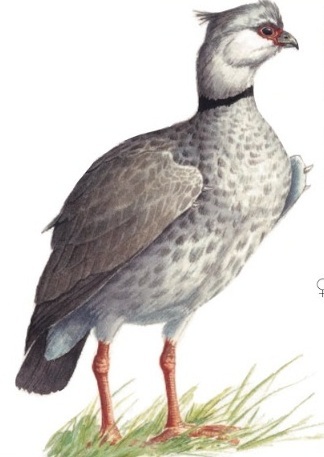
Screamers of Anhimidae

The Anseriformes are divided into two families distinguished by the absence or presence of horny lamellae in the beak: (1) screamers (Anhimidae), and (2) ducks and geese (Anatidae).

Anhimidae today only occur in South America and include three species that are distinguished from other anseriform birds in numerous features, including an unspecialized and rather galliform-like beak, the absence of webbed feet, and a highly pneumatized skeleton.

Screamers are a small group of peculiar aquatic birds found only in South America.. They are almost goose-size birds of fowl-like appearance, with fairly thick, long legs and feet without webs. The weight is 2-3 kilograms.

Heavy bodied and superficially gooselike, they have many unusual anatomical features that suggest an ancient lineage. Among other things, they lack feather tracts; the feathers on the head and neck are very short, soft, and downy; and the skin is thick and spongelike.

Screamers take their name from their loud, far-carrying calls. Two sharp, bony spurs project from the bend of each wing. The spurs are used in fighting, either between rival screamers or to drive off enemies, including hunting dogs and other predators.
Screamers of Anhimidae

Saturday, February 18, 2017

Family Balaeniciptidae: Shoebill bird

Wild shoebills live in African wetlands. Perhaps the most eagerly sought of all African birds, the shoebill is one of the few that is likely to make an impression on those travelers who regard pursuing rare birds to be about as diverting as hanging about in windswept railway stations scribbling down train numbers.

Because of the size and weight of the bill, the bird has to have a very thick neck to support it. The shoebill has long legs and large toes that spread out to carry the bird on the plants that float beneath the surface of the water on the lakes and rivers where it lives.

The shoebill is the quintessence of the patient hunter an it can stand entirely motionless for more than 30 minutes by which time one can hardly resists the desire to poke it to see if it still alive.

Being solitary and inconspicuous hunters, Shoebill can be hard to find, even where they are common. When agitated or startled, it can fly long distances. Its name comes from the shape of its bill, which resembles a wooden shoe.
Family Balaeniciptidae: Shoebill bird

Wednesday, June 8, 2016

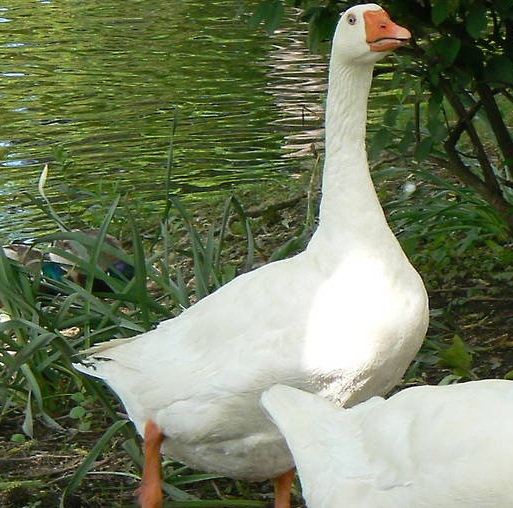
Goose

Geese are large birds with loud honking calls. Along with dicks and swans they belong to a group of birds called waterfowl in North America and wildfowl in Europe.

Geese have heavier bodies and longer necks than ducks but are smaller than swans.

These birds are equally at home on the water on the land or in the air. Common species or types of goose include the Canada goose the graylag, the barnacle goose, and the snow goose.

By 3000 BC geese were common in China and the Middle East. They were raised in ancient Egypt and have been part of everyday life in Western Europe since prehistoric times.

Geese usually feed on slugs, snails, worms, mice, hamsters, wheat, barley and froglets. They always fly in the shape of a ‘V’, as it allows at least 71% greater flying range. When goose in the lead gets tired, another goose takes over the position.
Goose

Saturday, May 18, 2013

American Flamingo

There are but six species in the world, only one of them seen in North America, Phoenicopterus ruber.

There are numerous captive flocks of flamingos in the United States, but only an occasional flamingo appears along the coast of Texas, Louisiana and Florida.

American flamingo has a unique bill, long, wavy neck and long legs with light pink to bright scarlet plumage. This pink bird has the longest legs and neck of any North American bird.

Juvenile flamingos are grey; their plumage runs pink or reddish as a result of ingesting certain bacteria and carotenes along with their food.

In North America, it is found only along the coast of Florida. It inhibits saltwater flats and lagoons. These flamingos prefer shallow inland lakes and rivers and mud flats.

Flamingos feed by filtering small organisms from the water though the comblike bristles in their bills. Females lay one or two eggs in cone shaped mud nests on remote offshore islands.
American Flamingo

Popular Posts